

Last Updated: October 24, 2026
Quick Summary
Why am i so bloated i look pregnant usually comes down to gas, fluid, stool or hormonal shifts stretching your abdomen outward, with the tight, hard look caused by pressure inside a confined space. Most cases have a clear, fixable cause, and a distended abdomen can appear within hours and vanish overnight.
- Gas is the most common driver, produced when gut bacteria ferment undigested carbohydrates.
- Period bloating typically builds before bleeding, peaks just before your period and eases once bleeding starts.
- A home urine test is most reliable from the first day of a missed period.
- Walk 10 to 15 minutes after meals to help move gas along.
- Book a medical review if bloating lasts more than two to three weeks despite dietary changes.
Table of Contents
- Why You Feel Bloated and Look Pregnant
- Common Distended Stomach Causes, From Gas to Hormones
- Pregnancy Bloating vs Period Bloating: Telling Them Apart
- Bloating or Body Fat? Reading the Difference
- How to Relieve Bloating: A Practical Troubleshooting Plan
- When to See a Doctor for Bloating
- Supporting Your Gut Day to Day
- Conclusion
- Frequently Asked Questions
Why You Feel Bloated and Look Pregnant
If you are asking "why am I so bloated I look pregnant," the short answer is that gas, fluid, stool or hormonal shifts have stretched your abdomen outward, and the tight, hard look comes from pressure inside a confined space. At OPT4SUPERHUMAN, we hear this question often, and the good news is that most cases have a clear, fixable cause. (Source: a 2023 report by the Australian Institute of Health and Welfare)
A distended abdomen can appear within hours and vanish overnight. That pattern tells you a lot about what is driving it. A distended stomach is an abdomen that measures visibly larger than usual, usually from trapped gas, slowed digestion or water retention rather than fat.
Below, we explain the causes, how to tell bloating apart from pregnancy or body fat, and a step-by-step plan to relieve it.
Common Distended Stomach Causes, From Gas to Hormones
Bloating almost always traces back to one of five areas. The trick is working out which one applies to you.
Gas, Swallowed Air and Gut Bacteria
Gas is the most common driver. Your gut bacteria ferment undigested carbohydrates, and that process produces gas. Swallowed air adds to it, especially if you eat fast, drink through a straw or chew gum.
Some foods are harder to break down than others. Digestive enzymes help split starches, fats and proteins so less reaches the bacteria that produce gas. A balanced microbiome matters too, and probiotics such as Weizmannia coagulans support that balance.
Food Triggers, Eating Habits and Constipation
What you eat and how you eat both count. Common food triggers include:
- High-carbohydrate foods, especially refined grains and some sugars
- Carbonated drinks, which add gas directly
- Salty meals, which encourage water retention
Eating habits matter just as much. Overeating, eating quickly and not chewing well all push more air and unprocessed food into your gastrointestinal tract. Constipation is the other big one: when bowel movements slow down, stool and gas build up and the abdomen distends. Fibre helps here, and green banana starch is a resistant starch that feeds good bacteria and supports regularity.
Pregnancy Bloating vs Period Bloating: Telling Them Apart
Pregnancy bloating vs period bloating comes down to timing, accompanying signs and what your body is doing hormonally. Both involve progesterone, which relaxes gut muscles and slows digestion, so gas and water retention build up. That is why the two can feel identical in the first weeks.
How the patterns usually differ
- Period-related bloating follows your menstrual cycle. It typically builds in the days before bleeding (the PMS window), peaks just before your period, and eases once bleeding starts. It often comes with breast tenderness, irritability, food cravings and low back ache.
- Early pregnancy bloating can appear around the time a period would be due and does not ease with bleeding. It may sit alongside nausea, fatigue, tender breasts, frequent urination or a metallic taste. But none of those signs is reliable on its own.
A common pattern is that period bloating resolves within a few days, while early pregnancy bloating persists and may worsen. That is a useful clue, not a diagnosis.
Why bloating alone cannot confirm pregnancy
An swollen, tight abdomen is not a pregnancy sign. Gas, constipation, fluid shifts and slowed gut transit can all produce the same look. Pregnancy is confirmed by detecting human chorionic gonadotropin (hCG) in urine or blood, not by how your belly feels or measures (Human chorionic gonadotropin (hCG) test - pregnancy). Do not use bloating, missed cravings or a 'feeling' as a substitute for a test.
A structured pregnancy-check decision path
Work through these questions in order:
- Could you be pregnant? If you have had unprotected sex, a contraceptive failure, or a late or missed period, treat pregnancy as possible until a test says otherwise.
- When should you test? A home urine test is most reliable from the first day of a missed period, or about two to three weeks after the sex in question. Testing too early can produce a false negative because hCG may not yet be detectable.
- What if the test is negative but bloating persists? Wait a few days and test again with first-morning urine, which is more concentrated. If bloating continues for more than two to three weeks, or your period remains absent, book a medical review rather than repeating tests indefinitely.
- What if the test is positive? Bloating in early pregnancy is expected and generally harmless. Book antenatal care and mention any severe pain, heavy bleeding or one-sided pain promptly.
- What if you are not sexually active or pregnancy is not possible? Move on to the digestive and hormonal causes covered elsewhere in this article, and use the tracking plan to look for food, bowel or cycle triggers.
If bloating tracks your cycle and settles each month, period-related bloating is the likely explanation. If it does not follow a pattern, or arrives with other persistent symptoms, treat it as a signal to investigate further rather than assuming pregnancy or PMS.
Bloating or Body Fat? Reading the Difference
Bloating and body fat behave very differently. Fat builds slowly and stays put. Bloating appears fast and changes shape.
Ask yourself:
- Does your belly look flat in the morning and swollen by evening? That points to bloating.
- Does the size change day to day? Fat does not.
- Does your abdomen feel tight and hard? That suggests pressure, not fat.
Weight gain from fat is gradual and does not come with abdominal discomfort or fullness after small meals. If your belly swells and shrinks within a day, you are dealing with bloating.
How to Relieve Bloating: A Practical Troubleshooting Plan
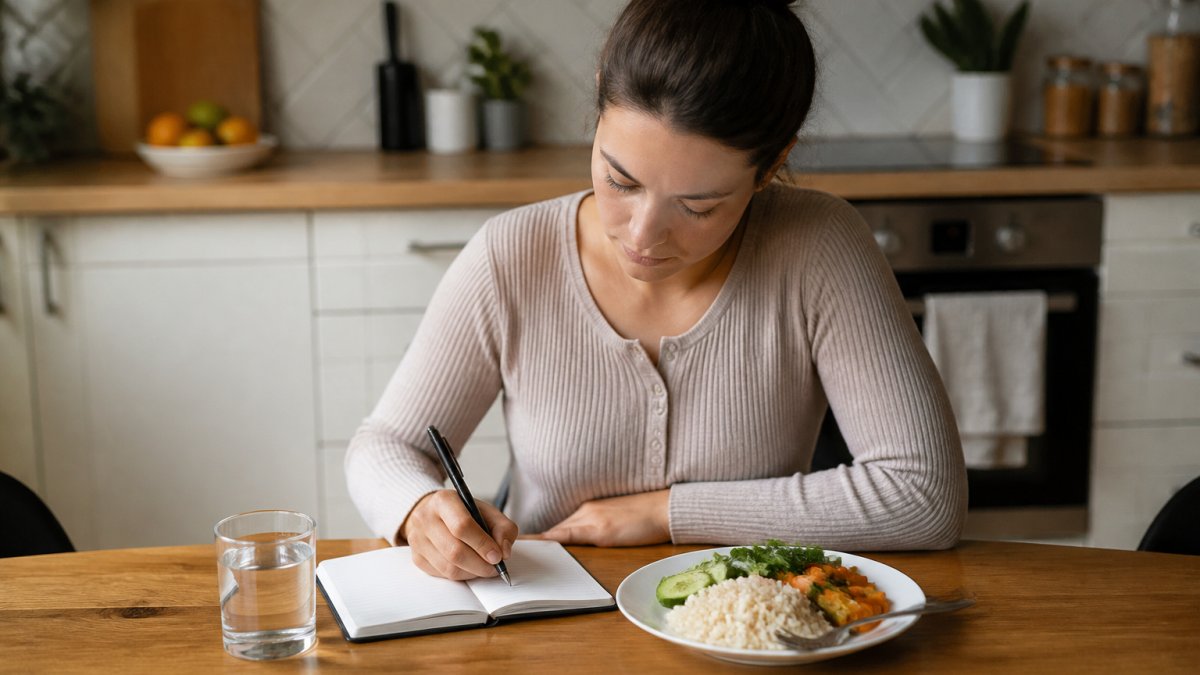
Knowing how to relieve bloating starts with finding your trigger. Most people guess. A short tracking plan beats guesswork.
Quick relief options while you investigate:
- Walk for 10 to 15 minutes after meals to move gas along
- Try peppermint oil capsules, which can ease cramping and gas
- Add gentle physical activity and exercise to your day (Source: guidelines on managing irritable bowel syndrome)
Track, Eliminate, Reintroduce
This is the plan we recommend to anyone with recurring bloating:
- Log meals, symptoms and bowel movements for two weeks
- Note when bloating peaks (after meals, before your period, at night)
- Remove one suspected trigger at a time for 7 to 10 days
Here are the quick relief options the article suggests while you work out your trigger.
| Relief option | What to do |
|---|---|
| Walking | Walk 10 to 15 minutes after meals to move gas along |
| Peppermint oil | Try peppermint oil capsules to ease cramping and gas |
| Carbonated drinks and gum | Cut both for a week |
| Water | Drink more water, since dehydration worsens constipation |
| Physical activity | Add gentle physical activity and exercise to your day |
When to See a Doctor for Bloating
Most bloating is harmless and settles with time. The skill is knowing which symptoms need urgent attention, which need a booked review, and which can be managed at home while you investigate triggers.
Seek urgent care now
Go to an emergency department or call 000 if bloating comes with any of the following:
- Severe or sudden abdominal pain, especially pain that is worse than any you have had before
- A hard, rigid or board-like abdomen that is tender to touch
- Vomiting that will not stop, or vomiting blood
These features can point to a blockage, inflammation or another condition that should not wait for a routine appointment.
Book a medical review
Make an appointment with a GP if bloating:
- Lasts more than two to three weeks despite dietary changes
- Recurs frequently, for example, most weeks over a couple of months, rather than settling
- Comes with unexplained weight loss or loss of appetite
What a clinician may ask and assess
A GP will typically take a focused history rather than rely on the word 'bloating'. Expect questions about:
- The pattern: when it started, how often it occurs, whether it is linked to meals, bowel movements or your cycle
- Bowel habits: stool frequency, consistency and any change from your normal
- Diet and eating habits, including carbonated drinks, dairy, wheat, artificial sweeteners and how quickly you eat
They may examine your abdomen, listen to your bowel sounds, and check for tenderness or swelling. Depending on findings, they may arrange blood tests (including coeliac screening and a full blood count), a stool test, or a referral for further investigation. Do not self-diagnose irritable bowel syndrome, coeliac disease or a food intolerance from an online checklist, these need proper assessment.
Persistent or recurrent bloating: the threshold to act
A useful rule of thumb is that bloating which keeps returning over weeks, or which interferes with work, sleep or eating, deserves a review even if each episode seems mild. Bringing a two-week symptom diary, meals, bowel movements, cycle timing and severity, makes the appointment far more productive and helps the clinician spot patterns you may have missed.
For official guidance on digestive symptoms, see the health information on bloating and digestion.
Supporting Your Gut Day to Day
Daily habits do more than any single fix. Chew slowly, eat at a table rather than on the run, and stop before you feel stuffed. Keep meals regular and stay active.
For a simple daily routine, a single scoop of a gut-friendly blend takes seconds. Our FAQs page answers common questions about using it, and our recipes and ways to use SUPERHUMAN show how to add it to coffee, smoothies and breakfast bowls.
Conclusion
Bloating that makes you look pregnant is uncomfortable and often worrying, but it is rarely serious. Track your triggers, adjust your habits and give your gut time to settle. If symptoms persist, see a doctor.
At OPT4SUPERHUMAN, we built our Australian-made collagen blend to support gut health, hormones and energy in one daily scoop. It is designed for real-life convenience, with no 3pm crash.
Frequently Asked Questions
Why does my stomach look pregnant when I'm not?
A distended abdomen often comes from gas and fluid trapped in the digestive tract rather than fat. Swallowed air, high-carbohydrate foods, carbonated drinks, constipation and food intolerances all slow digestion and let gas build up, pushing the belly outward. Hormonal shifts around your period can add water retention. If the swelling appears suddenly, is painful, or comes with changes in bowel movements, get it checked by a GP rather than assuming it is harmless.
How can I relieve a bloated stomach quickly?
Start with the basics: eat slowly, skip carbonated drinks and chewing gum, and reduce very salty meals for a few days. A short walk after eating helps gas move through the gastrointestinal tract. Peppermint oil has some evidence for easing abdominal discomfort and fullness. If constipation is part of the picture, increasing fibre and water gradually can help. Keeping a simple symptom diary for two weeks makes it much easier to spot which foods or habits trigger your bloating.
Does progesterone cause bloating?
Progesterone can contribute to bloating because it slows the movement of the digestive system, which lets gas and fluid accumulate. Levels rise in the second half of the menstrual cycle and climb much higher in early pregnancy, which is why bloating is common in both situations. If your bloating follows a predictable pattern tied to your cycle, hormones are a likely factor. If it is persistent or unrelated to your cycle, book a review with your GP.
When should I see a doctor about persistent bloating?
Book a medical evaluation if bloating lasts more than a few weeks, keeps returning, or comes with weight loss, blood in your stool, severe pain, vomiting, or a change in bowel habits that does not settle. Seek urgent care for a hard, tender abdomen, fever, or sudden severe pain. Endometriosis and other conditions can cause bloating, so persistent symptoms deserve a proper assessment rather than guesswork. A GP can arrange tests and refer you onward if needed.
